

Adaptive Charging for the Future of Mobility: Why Adjustable Charging Gaps Are Essential for EVs and Autonomous Fleets
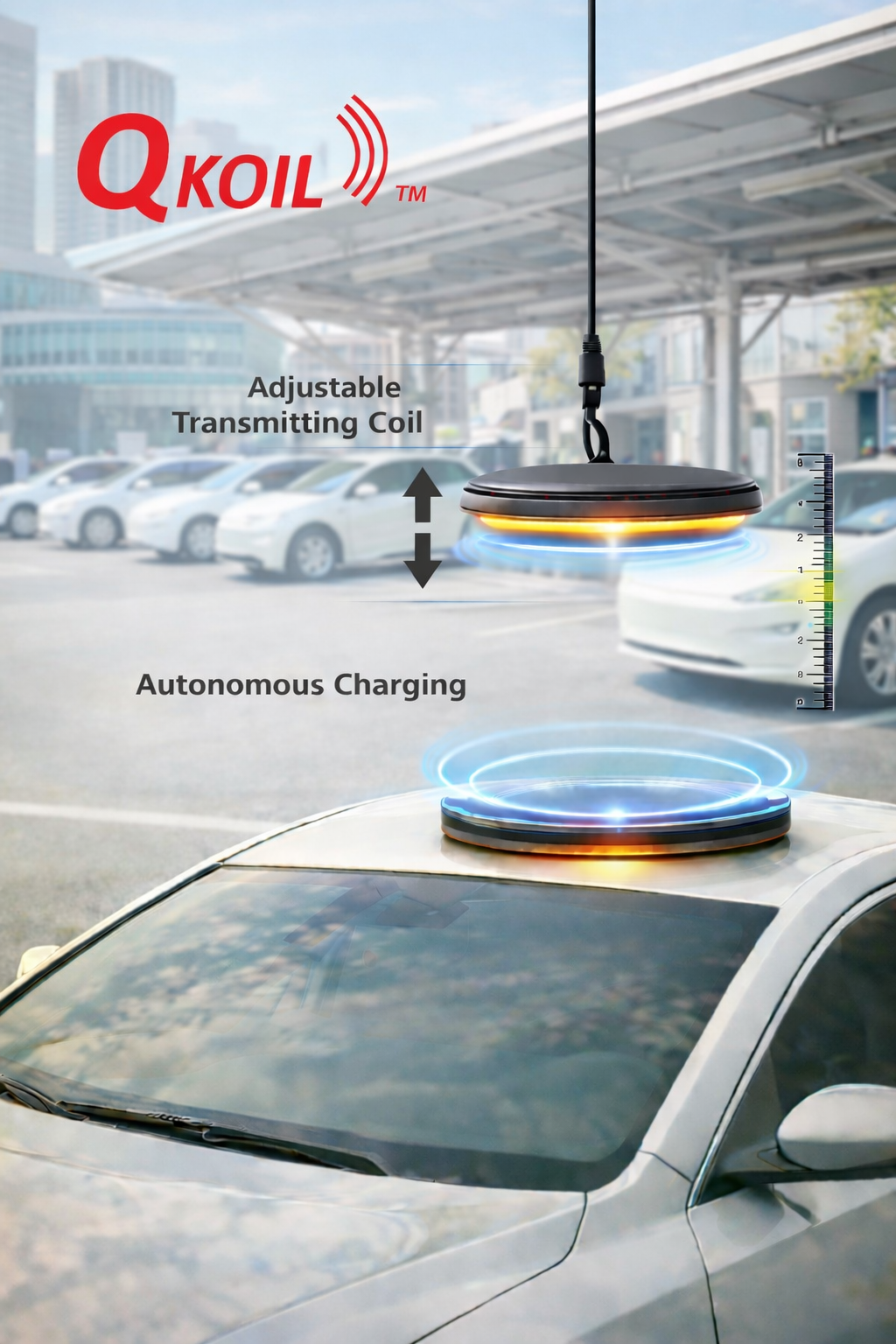
QKOIL autonomous charging system illustrating an overhead wireless EV charging setup with an adjustable transmitting coil suspended from a cable and a receiving coil mounted on the vehicle roof, showing a tight, optimized charging gap within an autonomous vehicle fleet charging hub.
QKOIL™ Files New Patent Application for Decentralized Overhead Charging Architecture for Autonomous and Fleet Vehicles
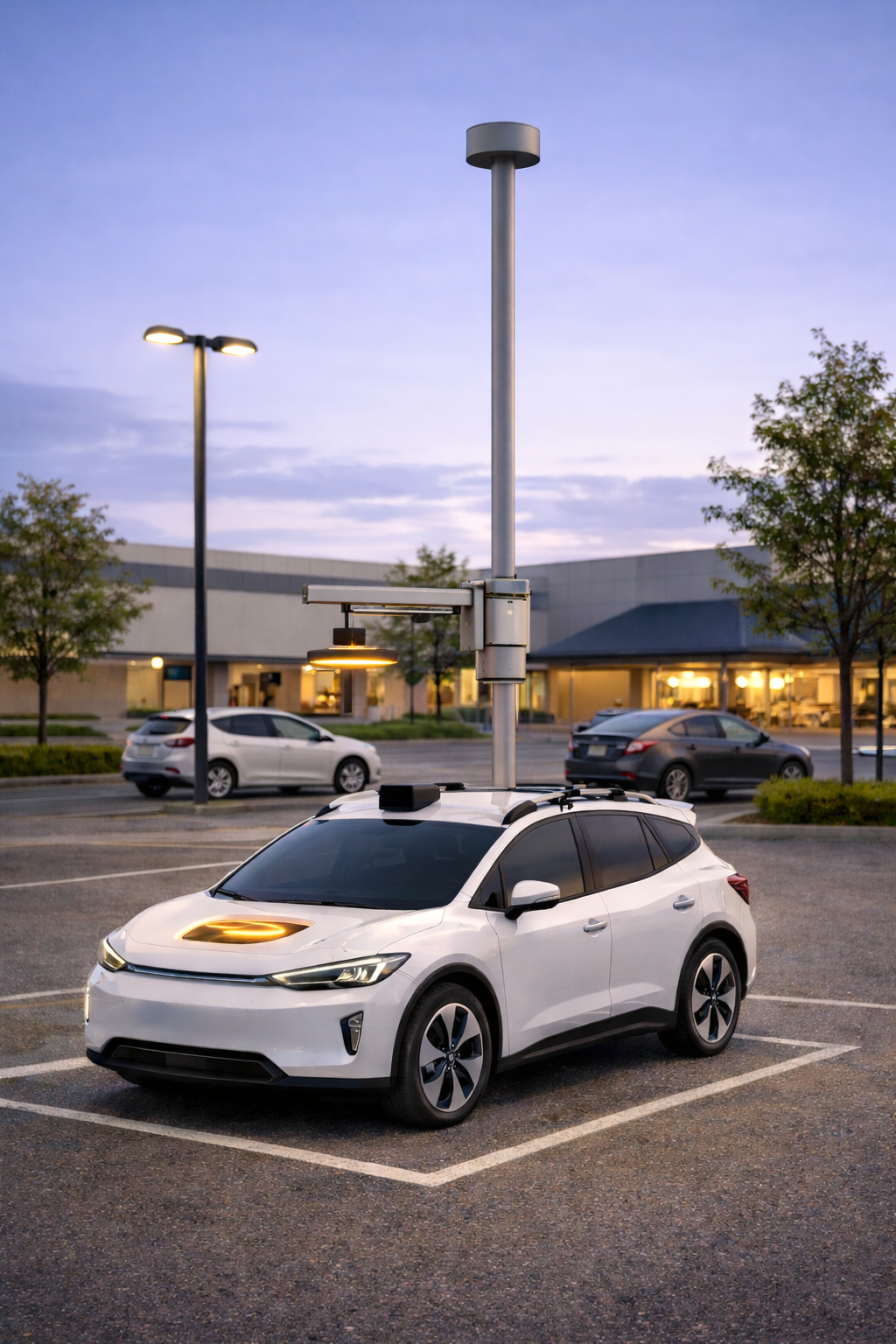
At the core of this new invention is a pole-supported overhead charging assembly that can automatically detect an approaching vehicle registered with the system, dynamically align a power transmitter to a power receiver installed on/in the vehicle’s surface, and initiate charging, all without requiring precise vehicle navigation to align charging elements underneath an autonomous vehicle. The system can either be wireless based using aligned transmitting and receiving coils to achieve inductive wireless charging of an autonomous vehicle (AV) or wired using robotics to automatically plug into the AV for fast charging.

Overhead Inductive Power Transfer for Autonomous Mobility, Industrial Robotics, and Consumer EVs
QKOIL’s overhead inductive charging architecture provides an alternative system topology with structural, operational, and cost advantages for autonomous vehicles (AVs), industrial autonomous mobile robots (AMRs), and consumer EV applications.
QKOIL™ Overhead Wireless Charging System Powers the Future of Autonomous Vehicle Hubs
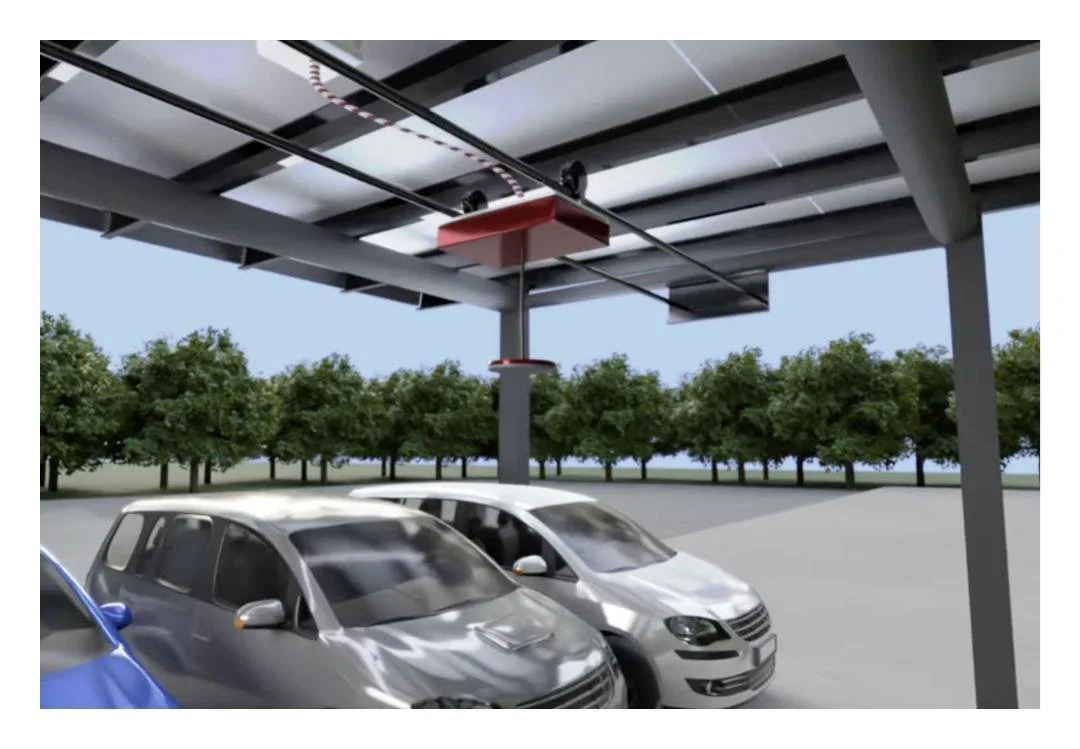
As the world moves toward autonomous transportation, the need for automated, efficient, and wireless EV charging solutions is greater than ever. The QKOIL™ overhead inductive wireless charging system from EV Charging Solutions is designed to meet this demand by enabling hands-free, fully automated charging for autonomous vehicles and electric mobility systems.