

Adaptive Charging for the Future of Mobility: Why Adjustable Charging Gaps Are Essential for EVs and Autonomous Fleets
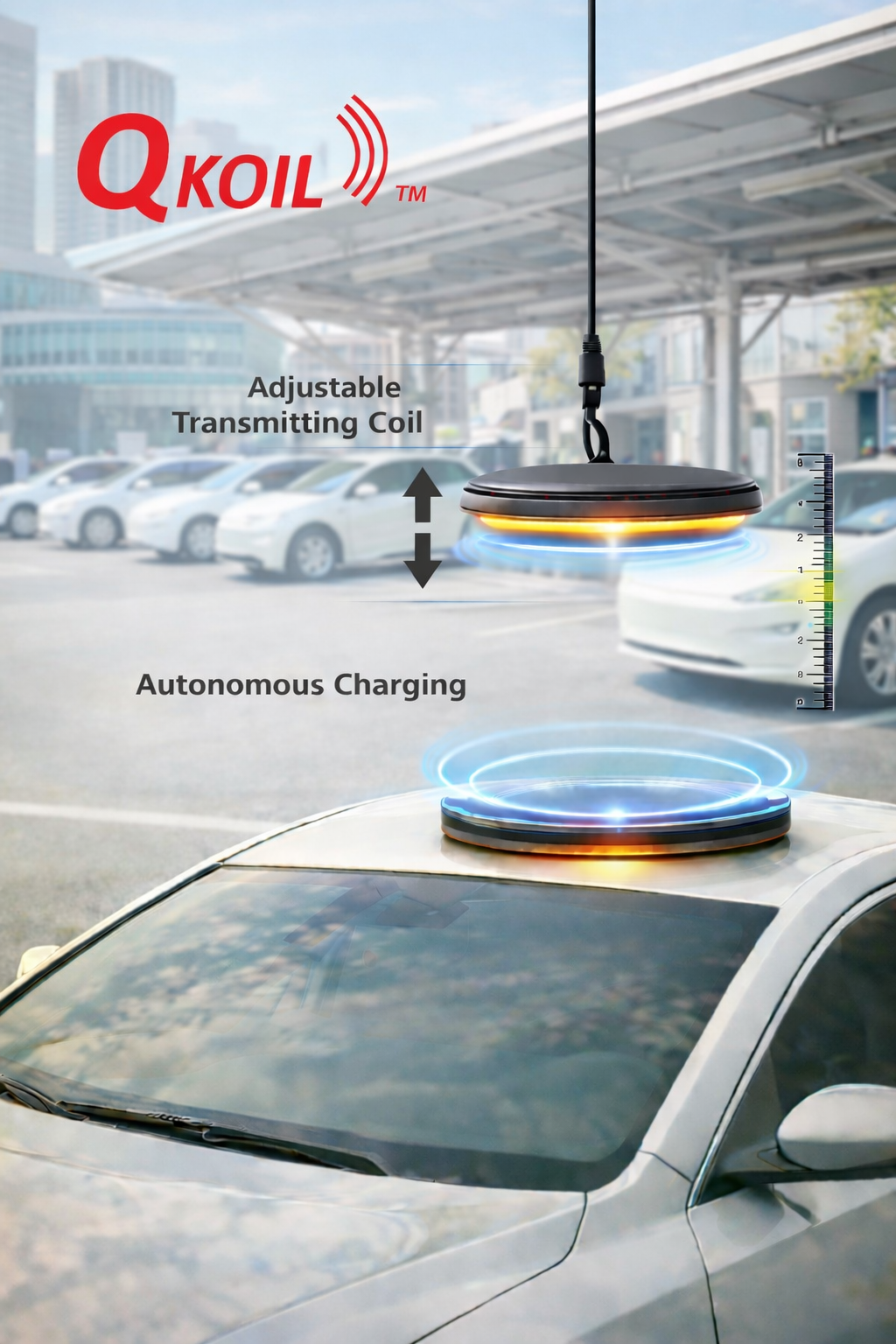
QKOIL autonomous charging system illustrating an overhead wireless EV charging setup with an adjustable transmitting coil suspended from a cable and a receiving coil mounted on the vehicle roof, showing a tight, optimized charging gap within an autonomous vehicle fleet charging hub.
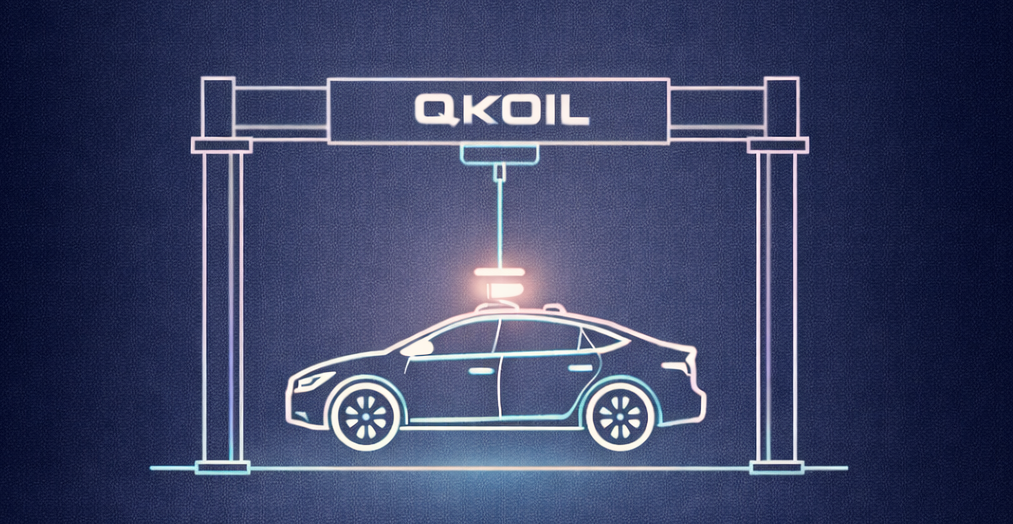
QKOIL™ Expands Its Patent Portfolio With Two New Filings Covering the Future of Autonomous Charging Infrastructure
EV Charging Systems LLC (dba QKOIL™) has filed two new patent applications that mark a significant milestone in the company's growing intellectual property portfolio. These filings join a portfolio of patent applications filed and issued in the United States, together with international patent applications filed under the Patent Cooperation Treaty (PCT), collectively staking out QKOIL™'s foundational position in the emerging field of autonomous charging infrastructure.
The two new applications cover innovations that go well beyond the company's core overhead wireless charging platform. Together, they address the full-stack challenge of truly autonomous charging: not just delivering power contactlessly, but doing so intelligently, adaptively, and without any human involvement — at the scale that next-generation autonomous vehicle and robot fleets will demand.
What Is Overhead Autonomous Charging? Why Every Warehouse Robot Fleet Needs It
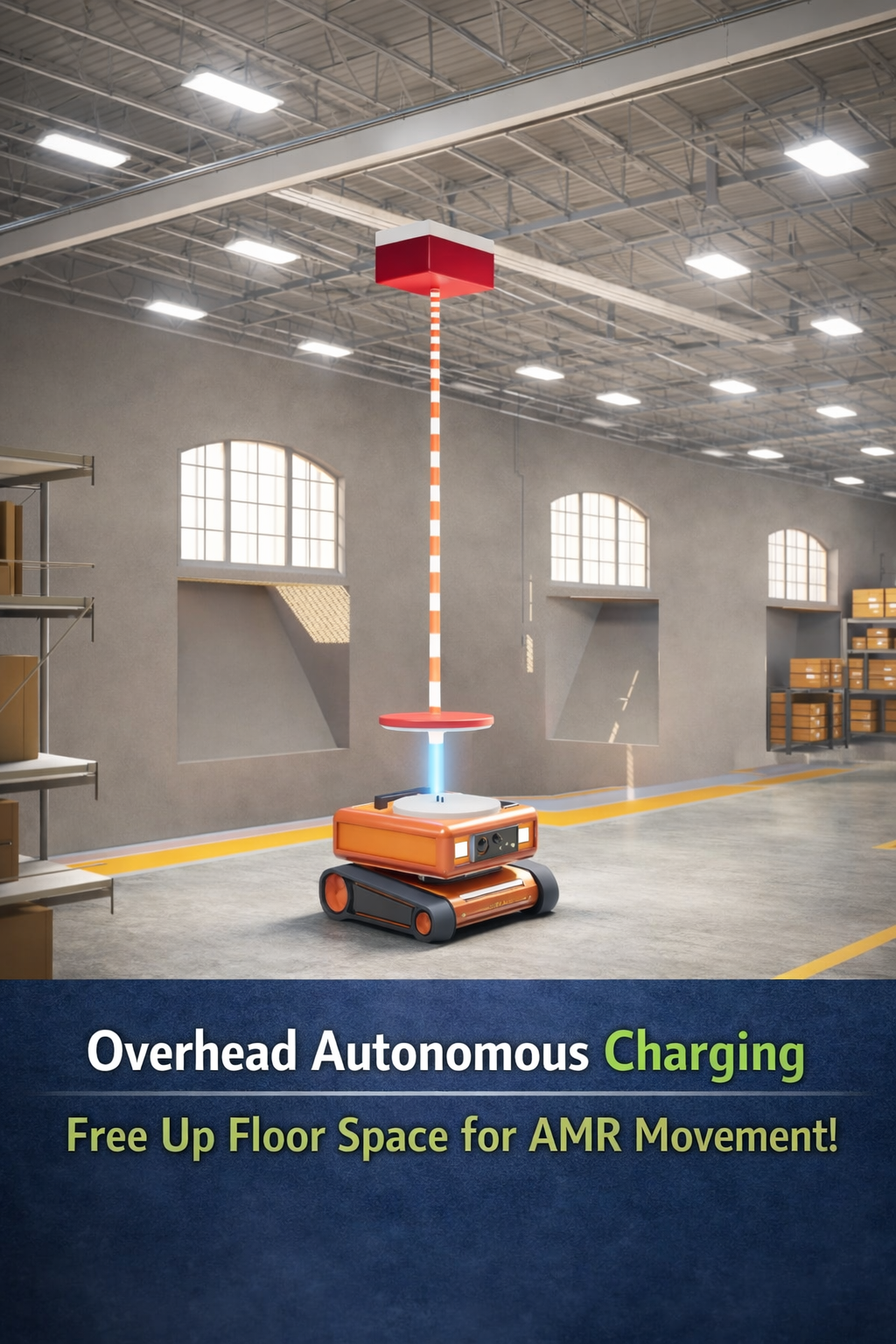
Overhead autonomous charging moves the entire charging apparatus up and off the floor. Rather than requiring a robot to navigate to a dedicated station, dock precisely, and sit idle, the power comes from above.
The QKOIL™ platform is a patented overhead wireless inductive charging system. Power-transmitting coils are mounted overhead, on ceiling infrastructure, gantries, or existing racking system, while each AMR carries a compact receiver coil on its upper surface. When a robot positions itself beneath an overhead unit, wireless power transfer begins automatically. No cables. No connectors. No human intervention.
This approach supports opportunity charging; the robot tops off its battery during any idle moment beneath the overhead unit rather than making a dedicated trip to a charging station. The result is near-continuous operation with dramatically reduced downtime.
QKOIL™ Files New Patent Application for Decentralized Overhead Charging Architecture for Autonomous and Fleet Vehicles
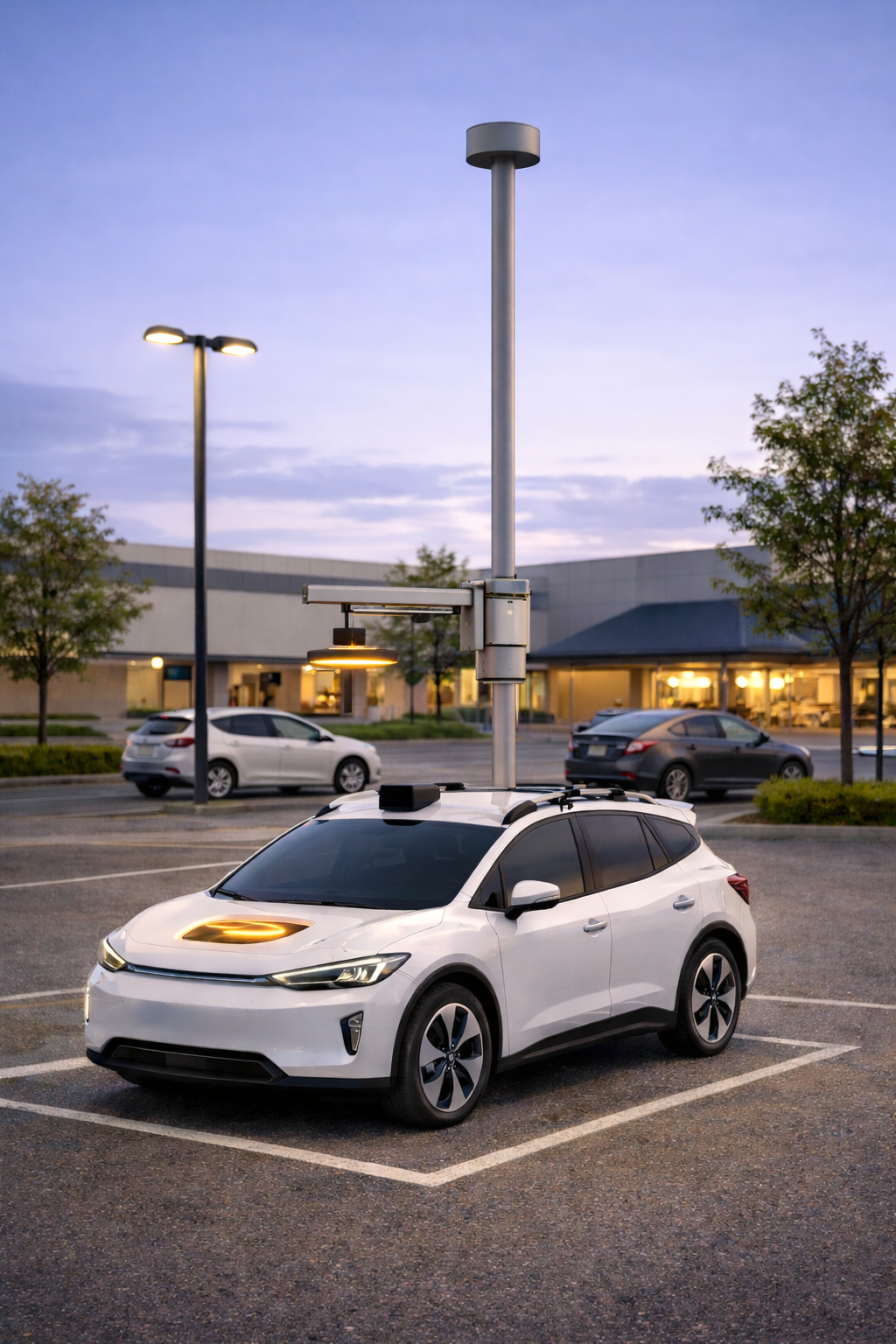
At the core of this new invention is a pole-supported overhead charging assembly that can automatically detect an approaching vehicle registered with the system, dynamically align a power transmitter to a power receiver installed on/in the vehicle’s surface, and initiate charging, all without requiring precise vehicle navigation to align charging elements underneath an autonomous vehicle. The system can either be wireless based using aligned transmitting and receiving coils to achieve inductive wireless charging of an autonomous vehicle (AV) or wired using robotics to automatically plug into the AV for fast charging.

Overhead Inductive Power Transfer for Autonomous Mobility, Industrial Robotics, and Consumer EVs
QKOIL’s overhead inductive charging architecture provides an alternative system topology with structural, operational, and cost advantages for autonomous vehicles (AVs), industrial autonomous mobile robots (AMRs), and consumer EV applications.
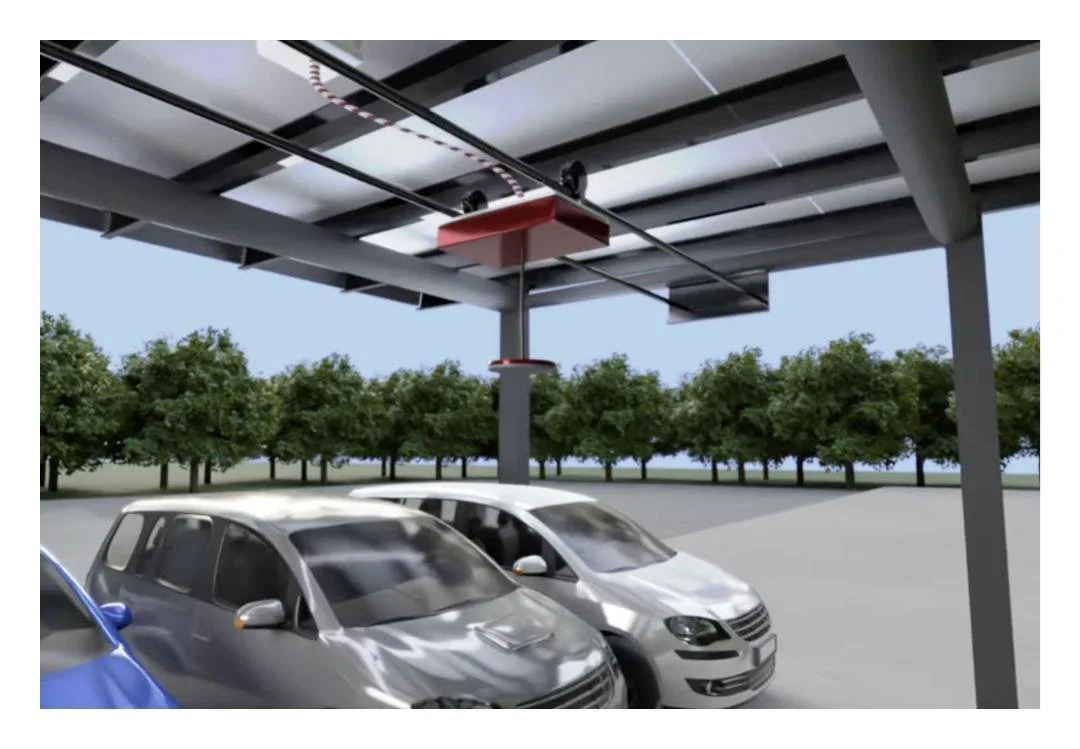
QKOIL™ Overhead Wireless Charging System Powers the Future of Autonomous Vehicle Hubs
As the world moves toward autonomous transportation, the need for automated, efficient, and wireless EV charging solutions is greater than ever. The QKOIL™ overhead inductive wireless charging system from EV Charging Solutions is designed to meet this demand by enabling hands-free, fully automated charging for autonomous vehicles and electric mobility systems.