

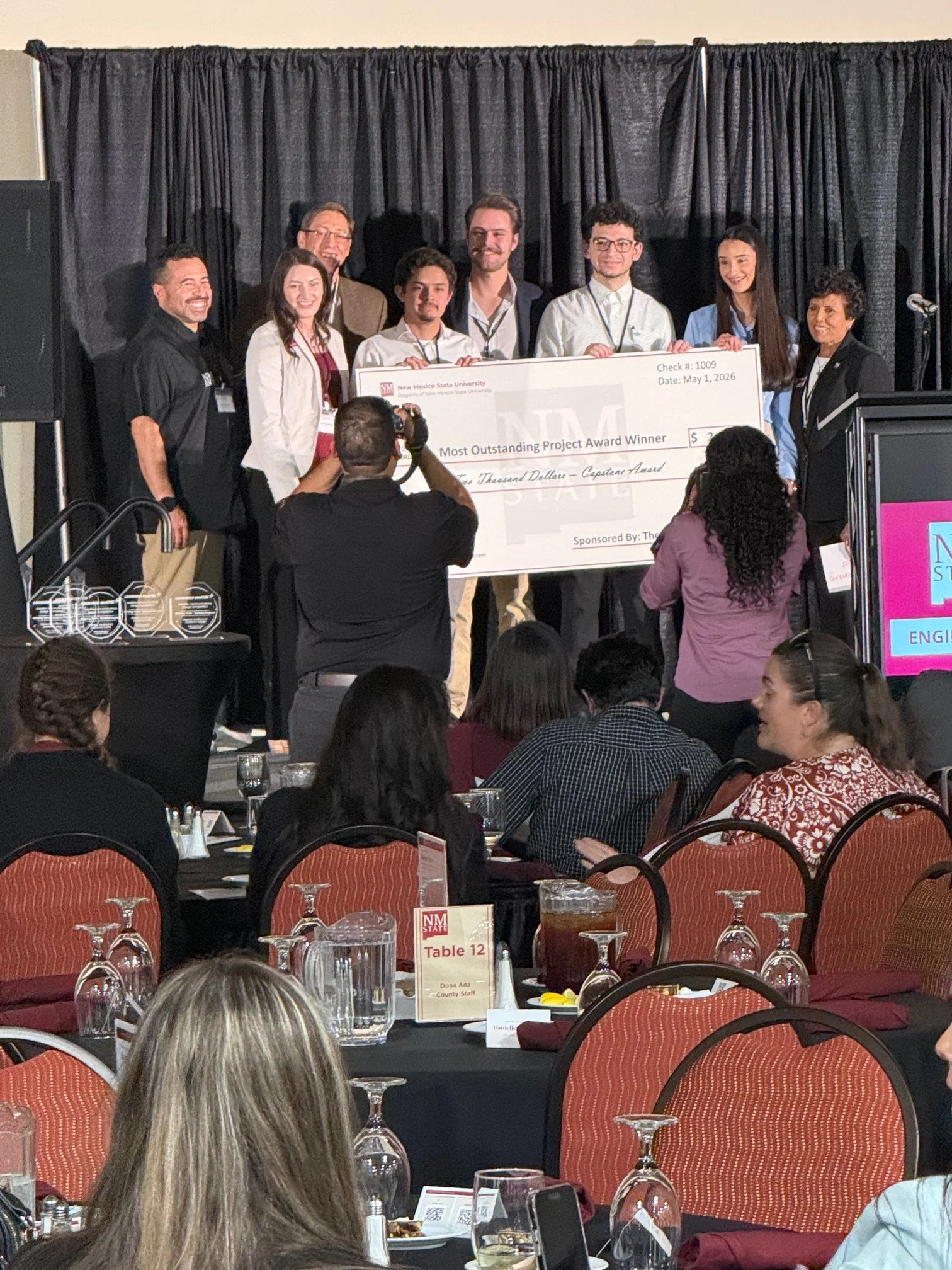
NMSU QKOIL™ Capstone Team Earns “Most Outstanding Project” Award for Advancing Overhead Wireless Charging Innovation
The 2025–2026 New Mexico State University QKOIL™ Capstone Team recently reached an exciting milestone, earning a total of $4,000 and the “Most Outstanding Project” award at the NMSU Interdisciplinary Engineering Capstone Design Program Showcase held on May 1, 2026, in Las Cruces. This recognition marks the culmination of a year-long collaboration between QKOIL™ and a talented group of senior engineering students (Dereck Alberto Gastelum Renpenning, Andrea Gallegos Quintana, Pedro Alfonso Garcia Carrer, and Alejandro Holguin Prado) who took on real-world challenges in wireless charging infrastructure.
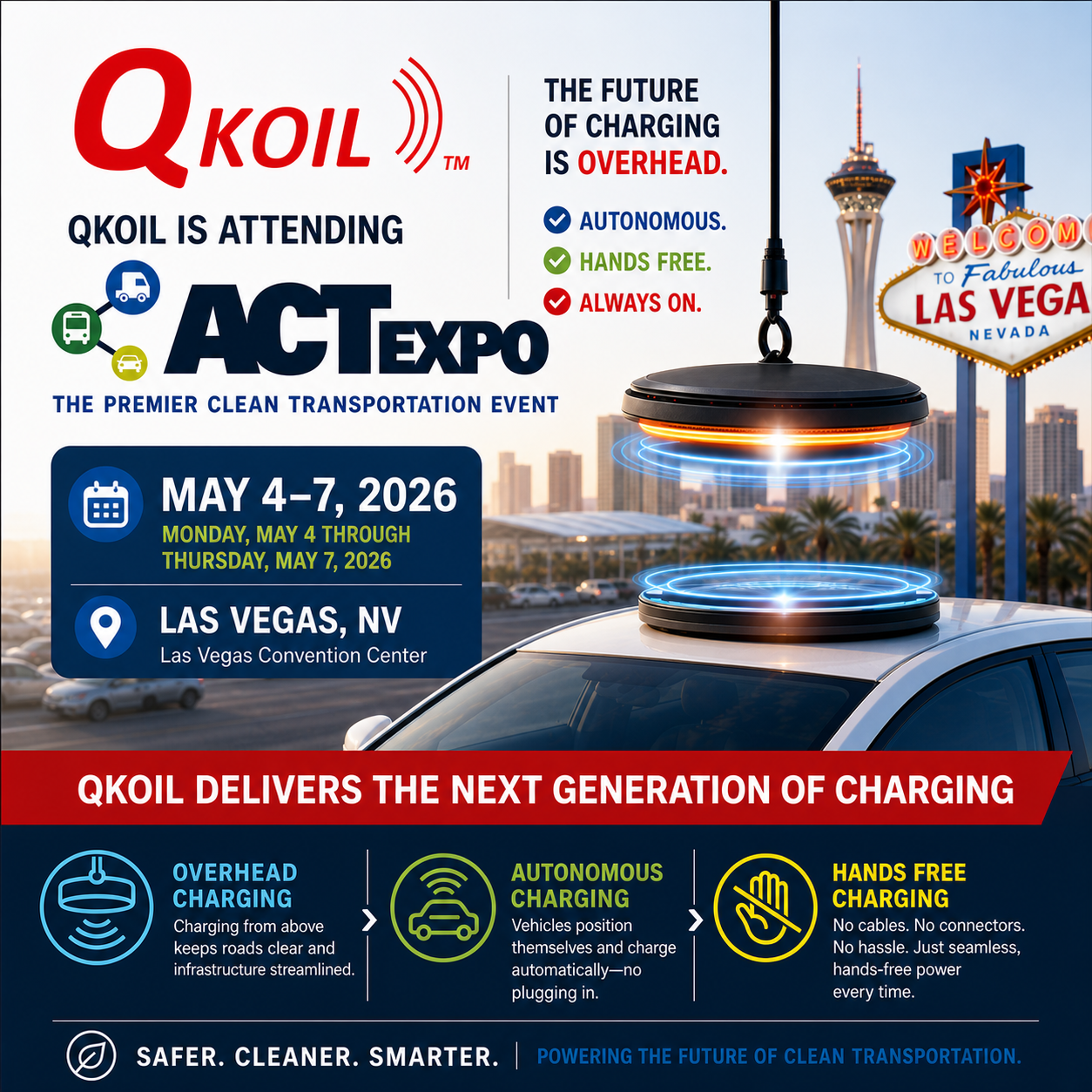
QKOIL to Attend ACT Expo 2026 in Las Vegas
QKOIL is excited to announce that we will be attending ACT Expo 2026, taking place May 4–7 in Las Vegas, Nevada. #autonomouscharging #handsfreecharging
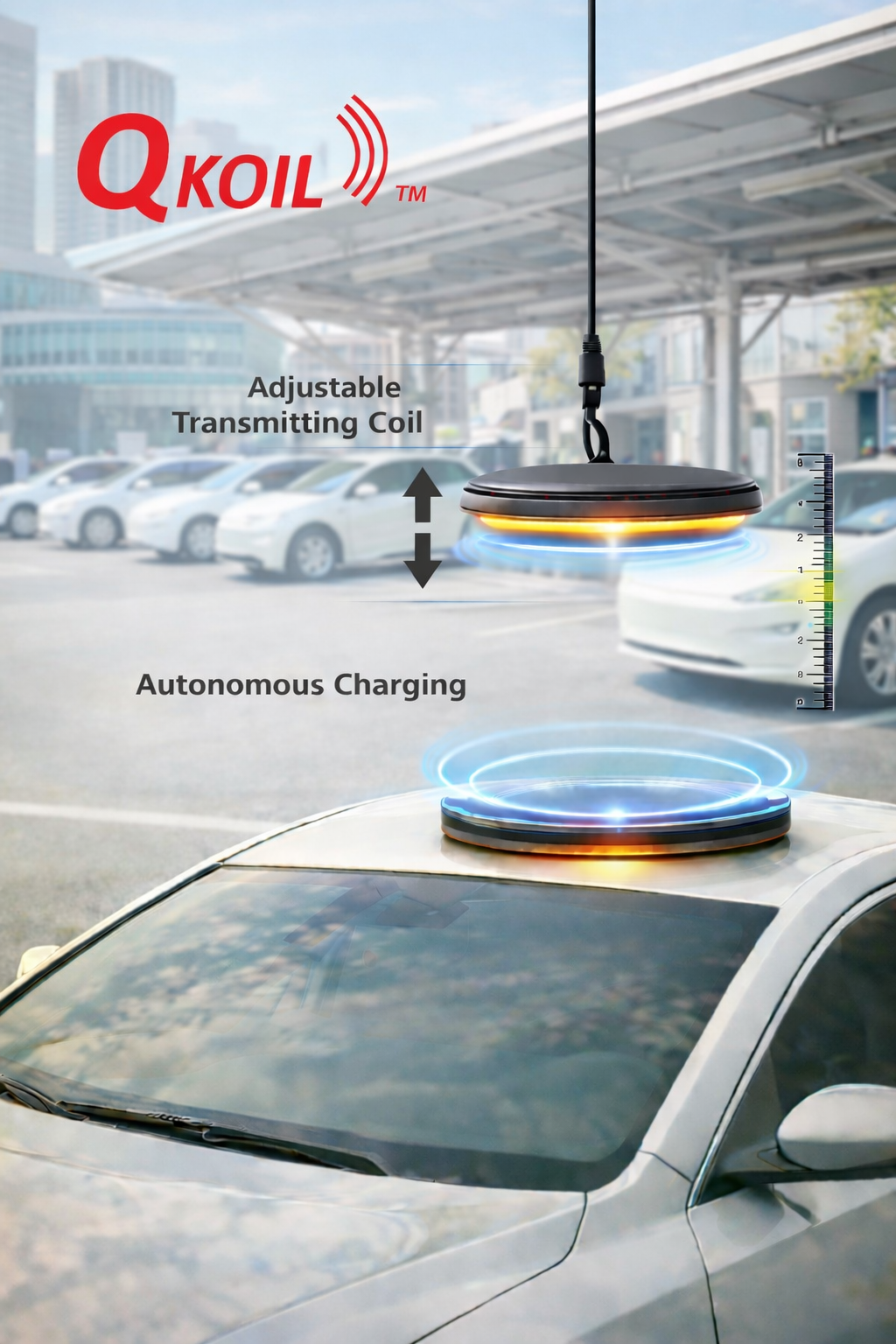
Adaptive Charging for the Future of Mobility: Why Adjustable Charging Gaps Are Essential for EVs and Autonomous Fleets
QKOIL autonomous charging system illustrating an overhead wireless EV charging setup with an adjustable transmitting coil suspended from a cable and a receiving coil mounted on the vehicle roof, showing a tight, optimized charging gap within an autonomous vehicle fleet charging hub.
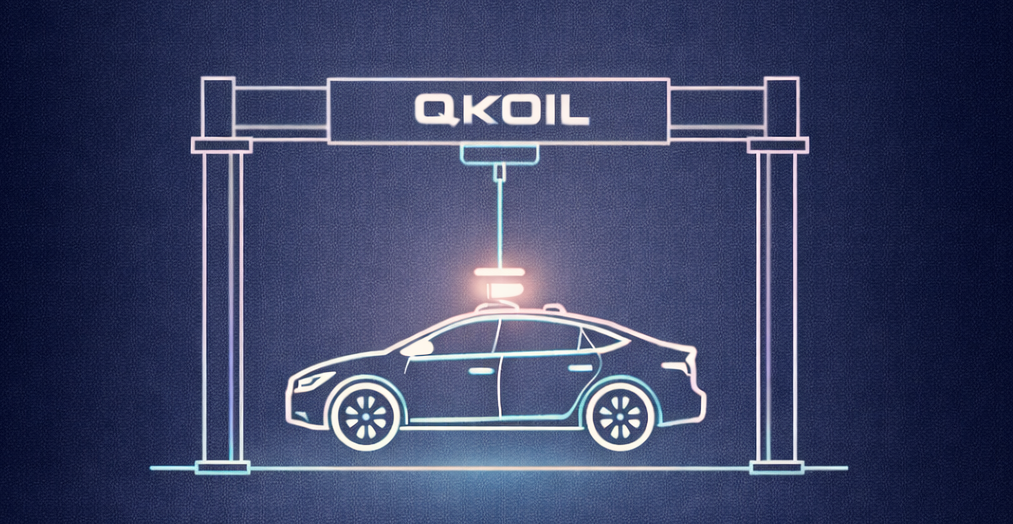
QKOIL™ Expands Its Patent Portfolio With Two New Filings Covering the Future of Autonomous Charging Infrastructure
EV Charging Systems LLC (dba QKOIL™) has filed two new patent applications that mark a significant milestone in the company's growing intellectual property portfolio. These filings join a portfolio of patent applications filed and issued in the United States, together with international patent applications filed under the Patent Cooperation Treaty (PCT), collectively staking out QKOIL™'s foundational position in the emerging field of autonomous charging infrastructure.
The two new applications cover innovations that go well beyond the company's core overhead wireless charging platform. Together, they address the full-stack challenge of truly autonomous charging: not just delivering power contactlessly, but doing so intelligently, adaptively, and without any human involvement — at the scale that next-generation autonomous vehicle and robot fleets will demand.
What Is Overhead Autonomous Charging? Why Every Warehouse Robot Fleet Needs It
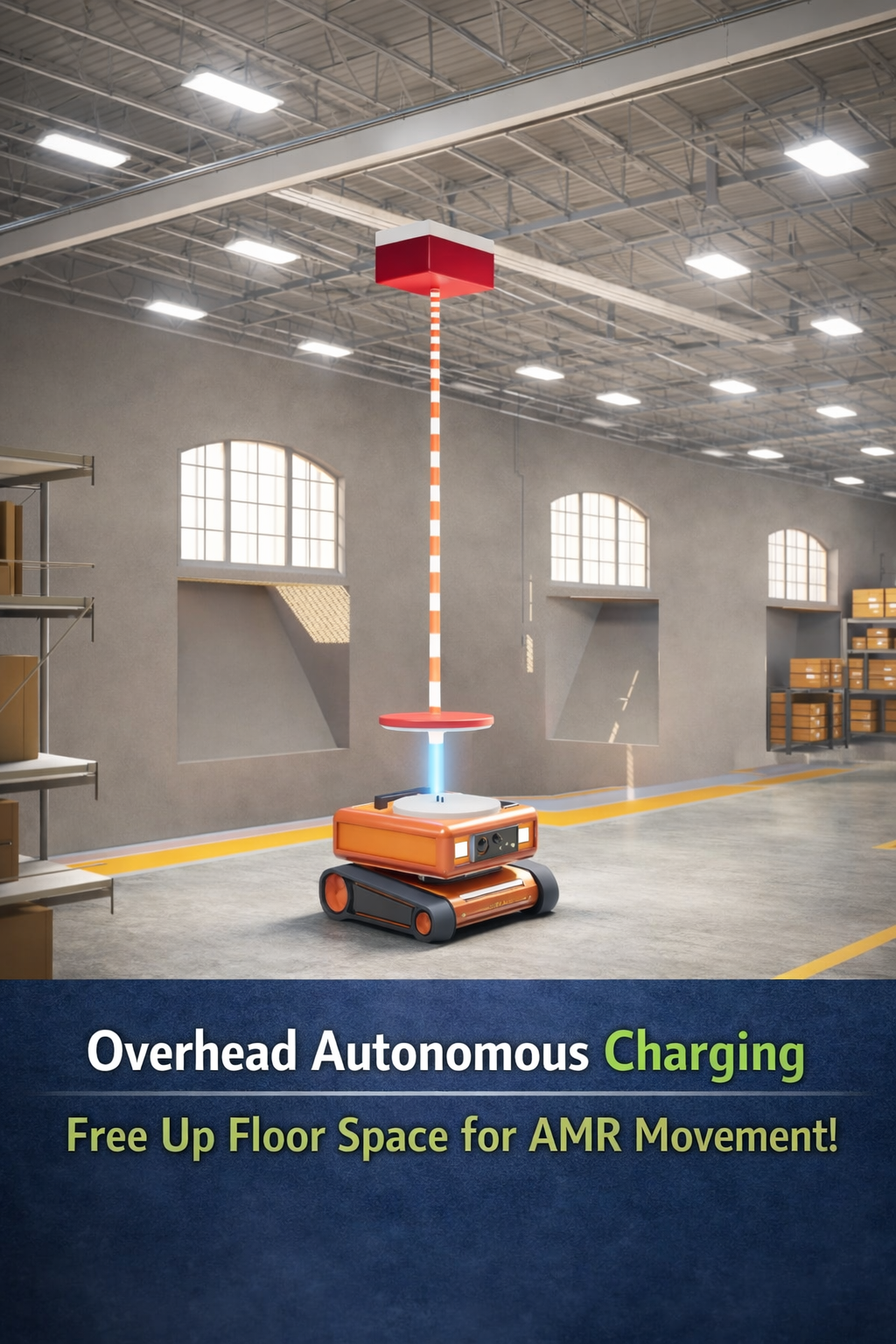
Overhead autonomous charging moves the entire charging apparatus up and off the floor. Rather than requiring a robot to navigate to a dedicated station, dock precisely, and sit idle, the power comes from above.
The QKOIL™ platform is a patented overhead wireless inductive charging system. Power-transmitting coils are mounted overhead, on ceiling infrastructure, gantries, or existing racking system, while each AMR carries a compact receiver coil on its upper surface. When a robot positions itself beneath an overhead unit, wireless power transfer begins automatically. No cables. No connectors. No human intervention.
This approach supports opportunity charging; the robot tops off its battery during any idle moment beneath the overhead unit rather than making a dedicated trip to a charging station. The result is near-continuous operation with dramatically reduced downtime.
The Autonomy Paradox:Why True Autonomous Charging Is the Missing Piece in the Robotaxi Revolution
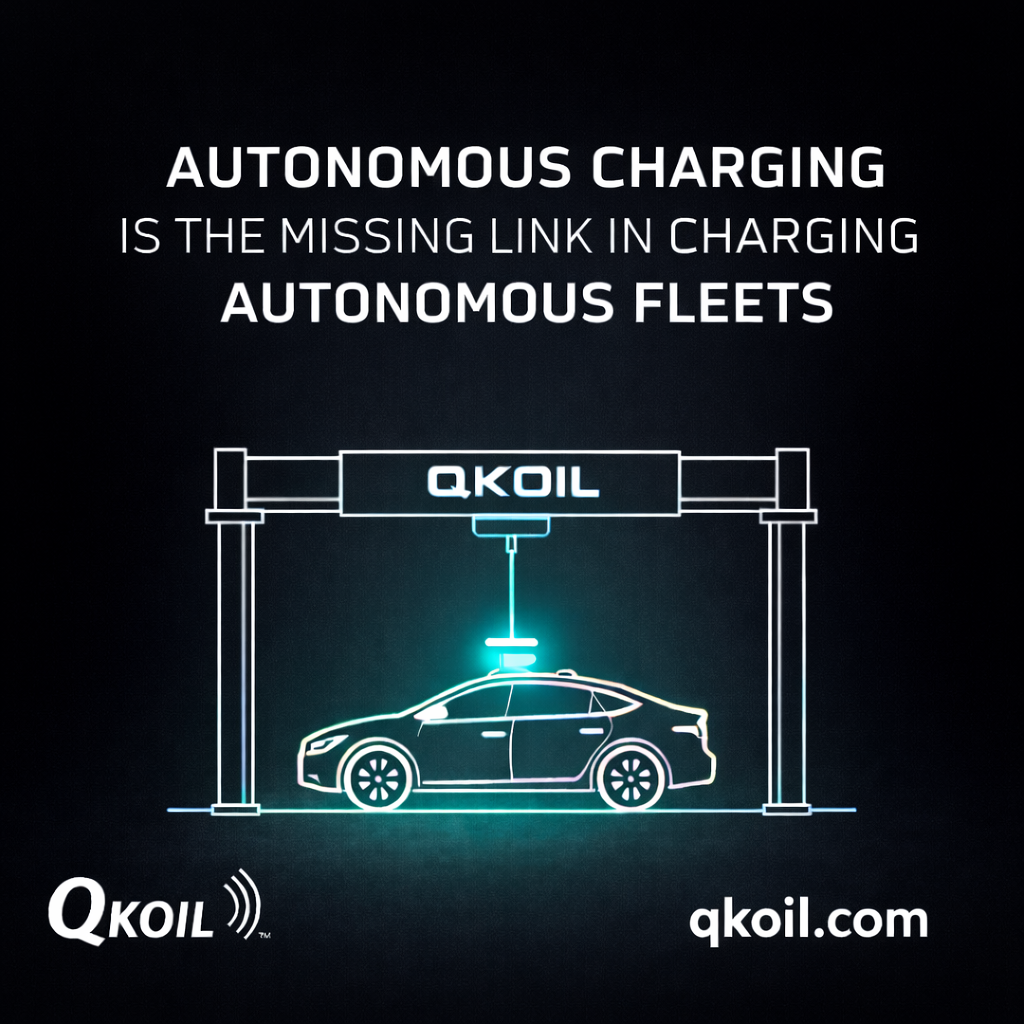
Technologies like the QKOIL overhead wireless charging system offer a path to closing this gap. By enabling vehicles to charge automatically, without human intervention, without precise parking alignment, and with a single installation capable of serving multiple vehicles, these systems address the operational, economic, and philosophical shortcomings of manual charging at their root.
The autonomous vehicle revolution will only be complete when the entire stack from navigation to energy management, operates without human dependency. The charging problem is solvable. The solutions are emerging. The industry that moves first to implement them will gain a structural advantage that compounds with every vehicle added to the fleet and every city entered. In the race toward true autonomy, the charger matters as much as the drive.