

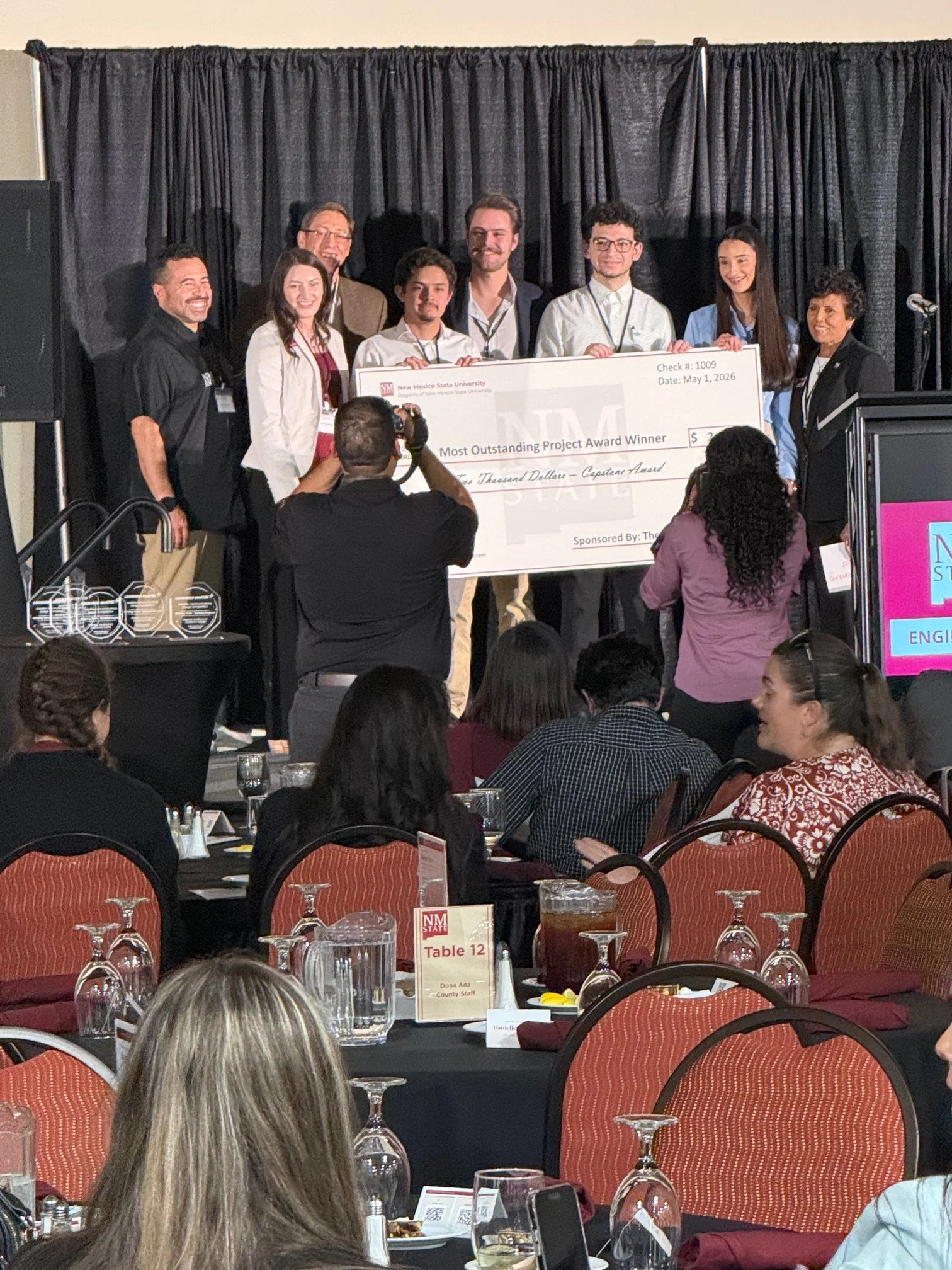
NMSU QKOIL™ Capstone Team Earns “Most Outstanding Project” Award for Advancing Overhead Wireless Charging Innovation
The 2025–2026 New Mexico State University QKOIL™ Capstone Team recently reached an exciting milestone, earning a total of $4,000 and the “Most Outstanding Project” award at the NMSU Interdisciplinary Engineering Capstone Design Program Showcase held on May 1, 2026, in Las Cruces. This recognition marks the culmination of a year-long collaboration between QKOIL™ and a talented group of senior engineering students (Dereck Alberto Gastelum Renpenning, Andrea Gallegos Quintana, Pedro Alfonso Garcia Carrer, and Alejandro Holguin Prado) who took on real-world challenges in wireless charging infrastructure.
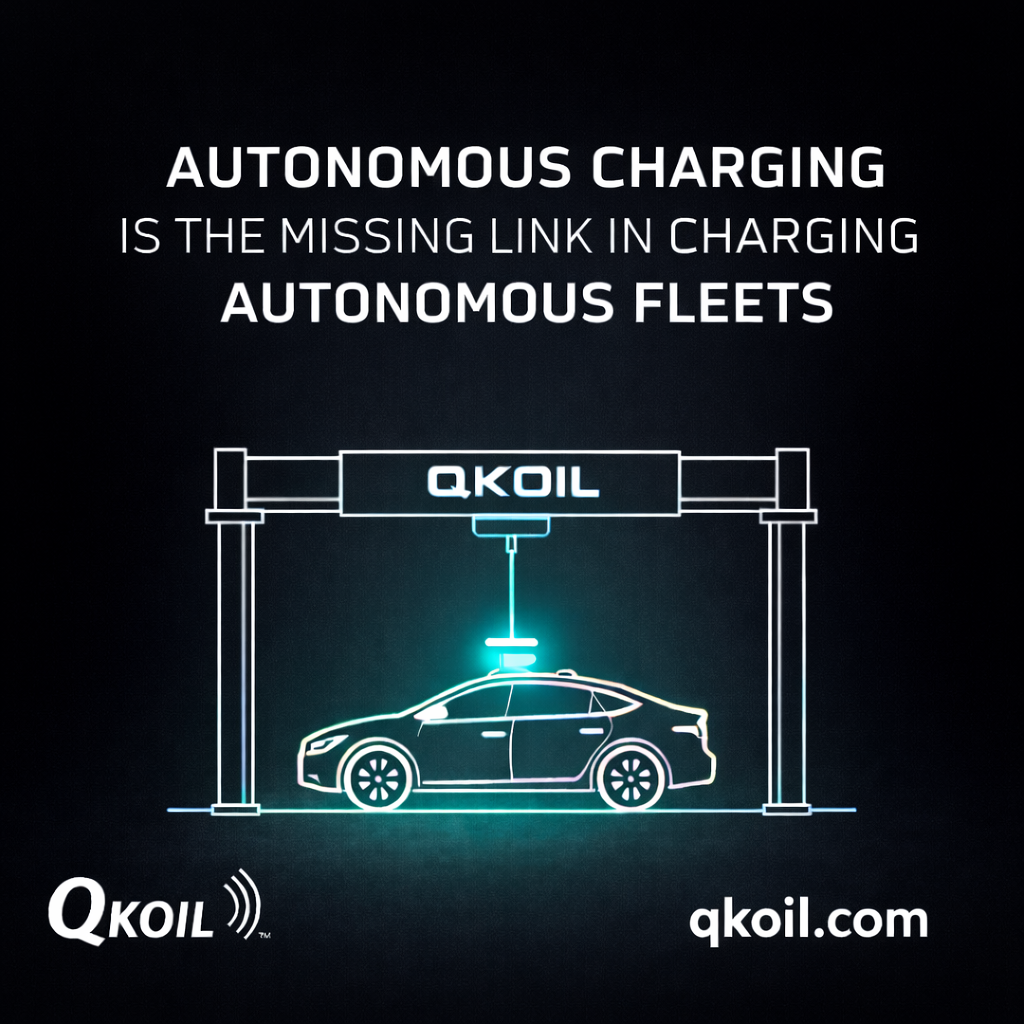
The Autonomy Paradox:Why True Autonomous Charging Is the Missing Piece in the Robotaxi Revolution
Technologies like the QKOIL overhead wireless charging system offer a path to closing this gap. By enabling vehicles to charge automatically, without human intervention, without precise parking alignment, and with a single installation capable of serving multiple vehicles, these systems address the operational, economic, and philosophical shortcomings of manual charging at their root.
The autonomous vehicle revolution will only be complete when the entire stack from navigation to energy management, operates without human dependency. The charging problem is solvable. The solutions are emerging. The industry that moves first to implement them will gain a structural advantage that compounds with every vehicle added to the fleet and every city entered. In the race toward true autonomy, the charger matters as much as the drive.
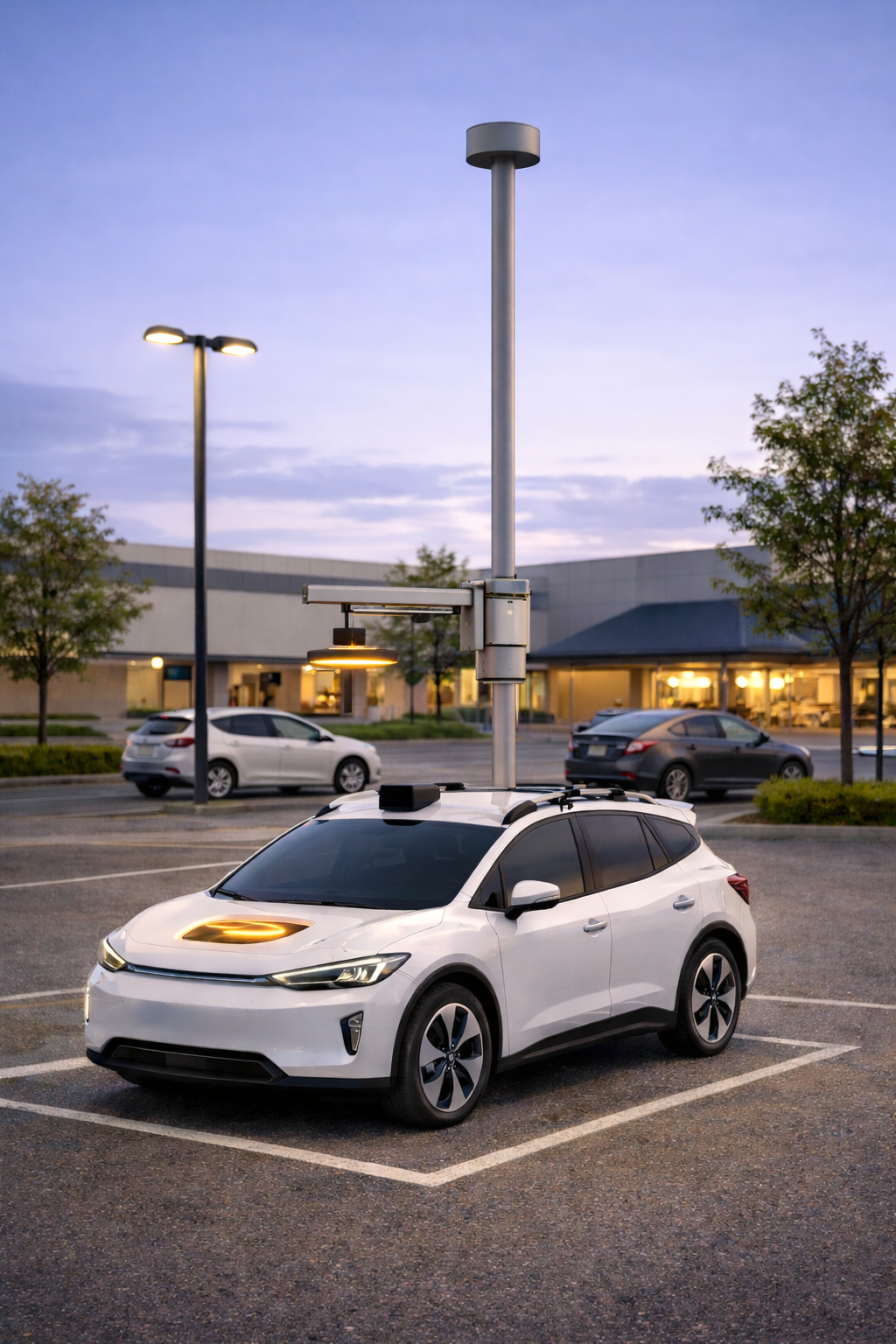
QKOIL™ Files New Patent Application for Decentralized Overhead Charging Architecture for Autonomous and Fleet Vehicles
At the core of this new invention is a pole-supported overhead charging assembly that can automatically detect an approaching vehicle registered with the system, dynamically align a power transmitter to a power receiver installed on/in the vehicle’s surface, and initiate charging, all without requiring precise vehicle navigation to align charging elements underneath an autonomous vehicle. The system can either be wireless based using aligned transmitting and receiving coils to achieve inductive wireless charging of an autonomous vehicle (AV) or wired using robotics to automatically plug into the AV for fast charging.

Overhead Inductive Power Transfer for Autonomous Mobility, Industrial Robotics, and Consumer EVs
QKOIL’s overhead inductive charging architecture provides an alternative system topology with structural, operational, and cost advantages for autonomous vehicles (AVs), industrial autonomous mobile robots (AMRs), and consumer EV applications.

EV Charging Solutions, LLC Files New U.S. Patent Application Covering Expanded Capabilities of the QKOIL™ Overhead Inductive Wireless Charging System
This latest patent application builds on EV Charging Solutions’ growing intellectual property portfolio surrounding the QKOIL™ overhead inductive wireless charging platform. The QKOIL™ system features a gantry charging architecture that supports automated positioning and deployment of a charge transmitting coil from an overhead support structure. The transmitting coil can be selectively lowered toward a corresponding receiving coil located on or within a target electric mobility system, enabling automatic, contactless charging without the need for human intervention, manual cable handling, or precise vehicle alignment.

QKOIL Wireless Charging - Powering the Future of Autonomous Robotics
For warehouse environments in particular, QKOIL offers a smarter way to keep robotic fleets powered. AMRs can pause briefly during idle cycles and top off their batteries without interrupting workflow. This minimizes downtime and maximizes operational efficiency. QKOIL is also modular and scalable, making it easy to deploy across multiple zones in a facility or adapt as needs evolve.

Wireless Charging for Electric Farm Equipment: How QKOIL Powers Agriculture
The QKOIL wireless EV charging platform is particularly beneficial in agriculture, where wireless charging needs to be flexible, durable, and hands-free.

Efficiency in Wireless EV Charging with QKOIL
A common question asked about the QKOIL system relates to efficiency and loss in wireless EV charging. There is a misconception that wireless EV charging systems are inefficient. Work performed by researchers Oak Ridge National Laboratory (ORNL), however, contradict this misconception.
What is Overhead EV Wireless Charging?
Who Can Benefit from Overhead EV Wireless Charging?

EV Charging Solutions, LLC Expands Global Patent Portfolio with Strategic Filings in China, India, South Korea, and EPO
EV Charging Solutions, LLC Expands Global Patent Portfolio with Strategic Filings in China, India, South Korea, and EPO covering above-the-vehicle approach to wireless charging of electric vehicles.